Thursday, December 7, 2017

Open Art Studios

My name is Marilyn Rodriguez and I have been working with BuildaBridge for about a year now.

I have truly enjoyed teaching the very diverse population in which BuildaBridge serves. I especially enjoy the concept of an open art studio. The staff prepares a brief demonstration for a task that the participants may choose to do in the open art studio or the participants can try something else. The participants are given a wide range of art materials to choose from in this context, if they decide not to do the activity that the staff members gave the demonstration on. The staff then helps the participants articulate what they would like to voice, whether it is through art or music.

The most beautiful component I have witnessed is how music can be transferred to so many different languages and then can be merged into one. A good example of this in the open art studio environment, is when everyone sings the BuildaBridge song, some people chime in with their native languages. This song has also been written in various languages, so the staff and clients can continue to learn together. Overall, it is a great joy seeing how the participants are always eager to engage in the art-making and learn.

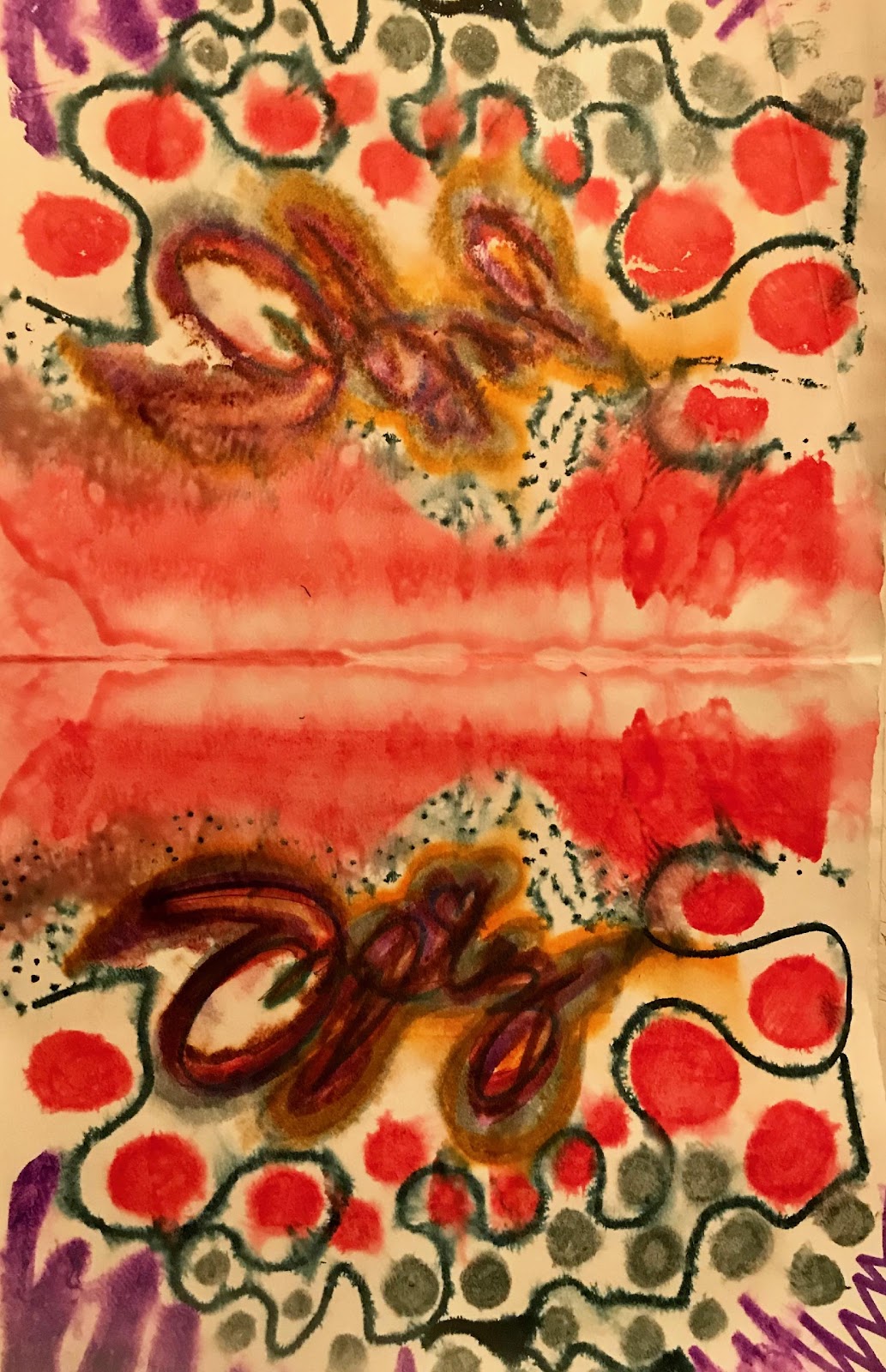
Macintosh HD:Users:marilynrodriguez:Desktop:BAB , (student)  art  abstract piece summer 2017.jpg Macintosh HD:Users:marilynrodriguez:Desktop:Bab , student abstract symmetry painting, #2.jpg
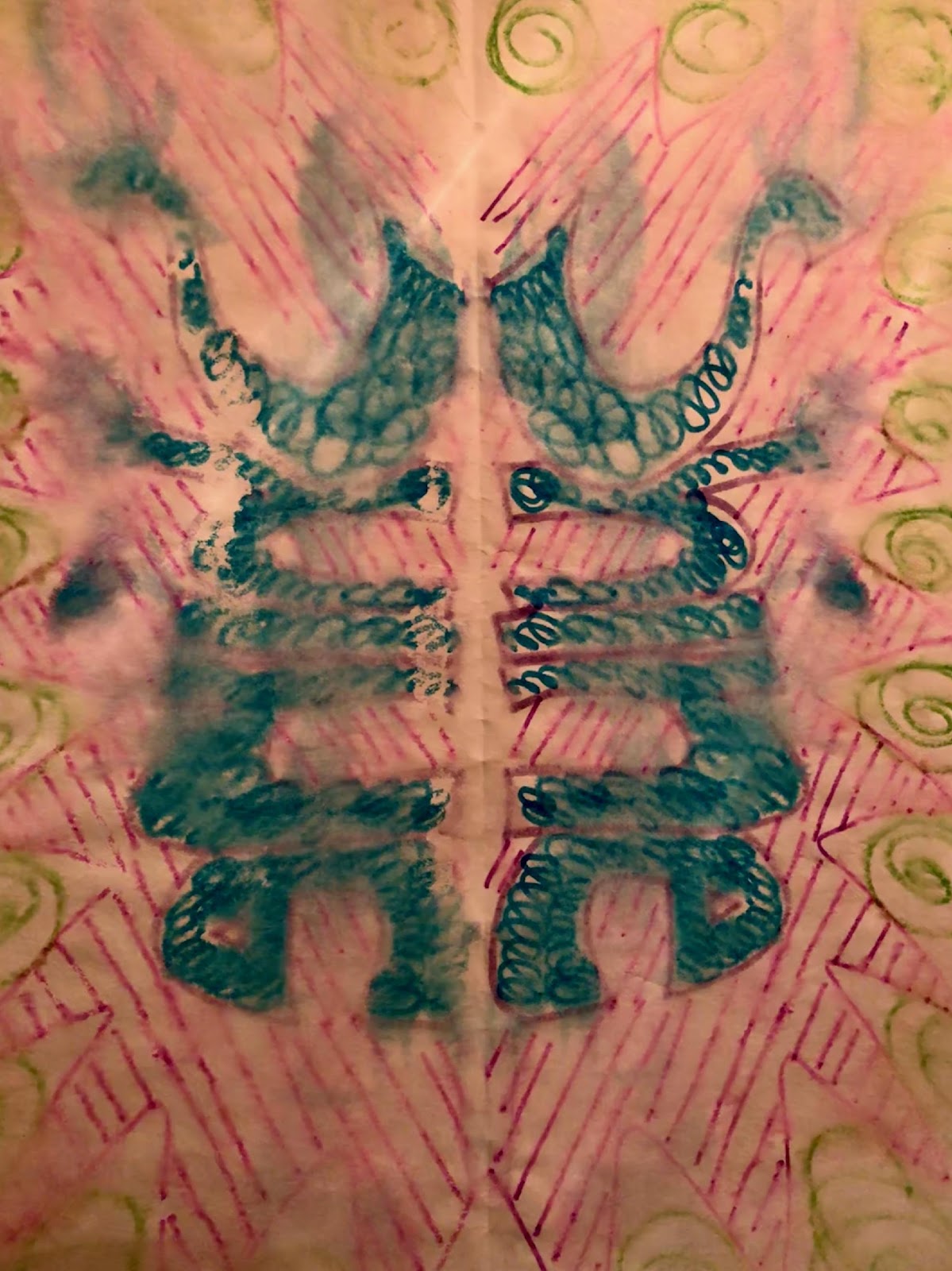
BaB, Abstract Symmetry Paintings #1 and #2

This these two paintings were created in an “open studio concept” where the participant felt free to express themselves and create.

HIAS Afterschool Program


My name is Debra Cotterall and I am a board-certified music therapist who has been working as a lead teaching artist with Buildabridge for over 3 years now. Throughout the month of February 2017, I had the pleasure of working with fellow music therapist, Grace Clements and the Hebrew Immigrant Aid Society (HIAS) Afterschool Program in order to implement a therapeutic, creative-arts based series of four lessons aimed at promoting students’ sense of self-efficacy and positive vision for the future in order to further increase personal resiliency. The curriculum aimed to support students’ holistic development through creative and academic experiences to foster inclusion, hope, resilience, self-efficacy, mastery, and vision for the future. Each lesson primarily integrated the music modality, exploring a variety of musical elements as they related to real-world application in everyday life. Music and movement were utilized to assist students in processing and coping with current resettlement to the US, promoting mental health and acculturation, and building community.

This was an exciting and new experience for all involved as this was the first multi-week series with the HIAS after-school program. Students were enthusiastic about using instruments and working on English language skills. After our first session, it was clear that interventions and activities to support language learning and increased impulse control were best suited for this active group. There were a few activities that worked best and led to great learning/teaching moments, community building, identification of resiliency statements, and embracing and sharing of one’s personal culture. After beginning each lesson with our opening ritual, students learned new musical terms such as “allegro” or fast, “adagio” meaning slow, etc. The group discussed that most musical terms are written in Italian. Students eagerly shared the meaning of these words in their native languages and discussed how they could be applied in our music making as well as everyday lives. This time always seemed to foster increased community and understanding of others as well as reinforcing the importance of one’s culture and background. Our next activity, created and led by assistant teaching artist Grace Clements was a big hit! The students were seated in a circle and each had a different instrument. They initially worked on following the teacher’s instructions to stop and go and pass instruments to their peers in order to try all instruments. As lessons progressed, the students began following musical terms/instructions in order to change the tempo or dynamics. Teachers encouraged students to lead the activity at times and utilize musical terms in their native languages as they had shared with the class.

The next activity combined both music and movement to reinforce language learning, specifically opposites. This body percussion exercise was entitled “This is…” and included the following lyrics: “This is big, big, big [clap, clap], this is small, small, small [clap, clap], this is short, short, short [clap, clap], this is tall, tall, tall [clap, clap],this is fast, fast, fast [clap, clap], this is slow, slow, slow [clap, clap], this is yes, yes, yes [clap, clap], this is no, no, no [clap, clap]!” Students were taught with limited verbal directions but through modeling of hand gestures and melody. The group seemed to love singing this song several times each week and eventually added musical directions to change tempo and dynamics. The movements of the arms to mimic words in the song helped to support the newest language learners in the group to understand and practice basic vocabulary in a fun and creative way!

All four weeks culminated with our Resiliency Song! A verse of the song was written each week and then recorded in our final session. It was based on the song “Stand By Me” originally performed by Ben E. King. Each week students focused on different resiliency statements including “I haves” (identifying personal supports), “I cans” (personal skills and coping skills), and “I ams” (positive traits and characteristics). Students utilized musical experiences from the beginning of each session to identify such statements (i.e. I can sing, I have friends, I am funny, etc.). The group re-wrote the verses to the song to include a resiliency statement from each student and learned the chorus to “Stand By Me” which includes “so friends, friends stand by me, oh stand by me…” This project allowed students to identify and share the basic building blocks for personal resiliency and worked perfectly with amount of time given for this group. This was such a fun and inspiring group to work with! Each amazing student shared some part of their journey and I will remember our work together for years to come!!
Sunday, November 12, 2017

PPR Field Trip to Bartram's Garden

On October 27, 2017, Sofya Mirvis, Chelsea Faulkner, and Julie Kring-Schreifels, teaching artists at BuildaBridge, led a group of six people on a field trip to Bartram’s Garden in Philadelphia. This trip began with a very tranquil and engaging tour through Bartram’s Garden. During the tour, everyone got to try out different types of edible wild fruit, flowers, and plants, including: passion fruit, figs, and locust pods. The clients also picked out their favorite plants, fruit, and/or flowers while on the walk through the garden to later draw, paint, or put on a sun print. When we got back from the tour, the group was given a demonstration on botanical illustration. In the demonstration, they learned about the history, the techniques necessary, and the resources that were available in the classroom for botanical illustration. Two alternative activities were also given: sun prints and printmaking. After the demonstrations, everyone excitedly and diligently got to work. Overall, the trip felt like a success to BuildaBridge staff and the PPR clients who attended. Each person went home with one or more piece of art, had a great time expressing themselves with the art mediums available, bonded and reminisced over plants native to their home countries, and relaxed. We are all looking forward to the next PPR field trip in October of 2018!

Finding edible plants and plants for the botanical illustration.jpg
Searching for appealing plants for the botanical illustration


Starting Botanical Illustration.JPG
Working on a botanical illustration

Wednesday, July 20, 2016

PPR Women and Children Group Explores Healing Through Mural

Macintosh HD:private:var:folders:mx:lx90j5f564g69x7fb4wj5c440000gr:T:TemporaryItems:f19755ca-60ad-4a0c-af3e-e8adbcdb265a.jpg
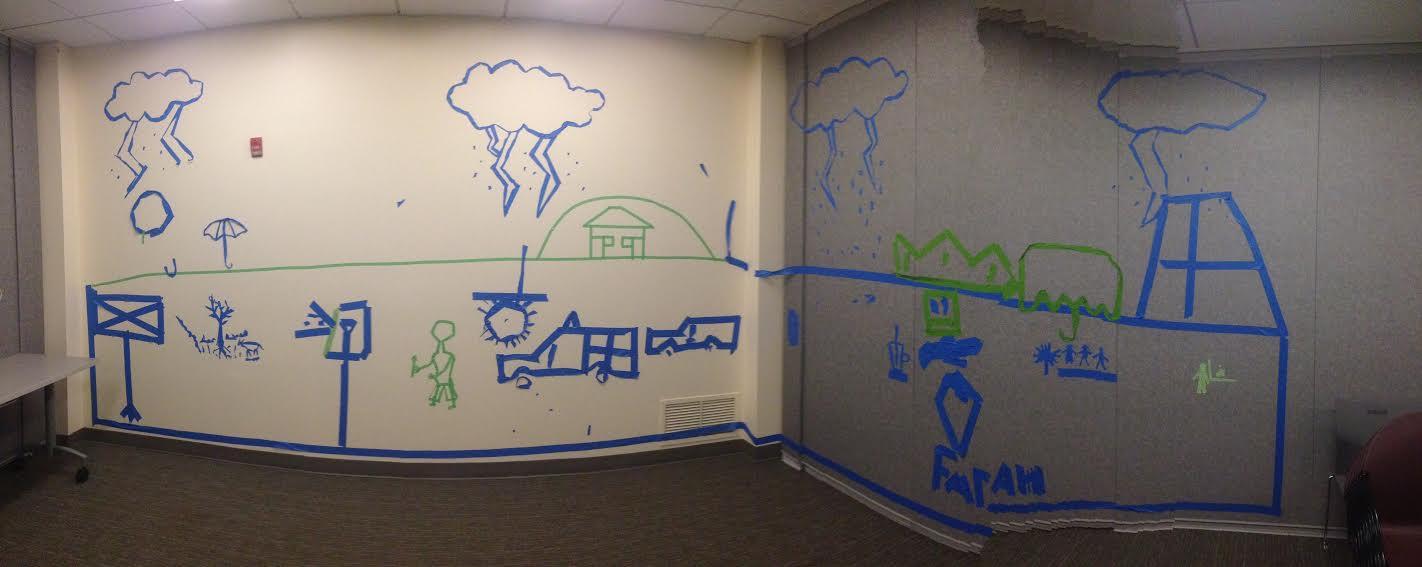
Full view of the classroom-size tape-art mural, which dealt with themes of healing and safety.


Lead Teaching Artist - Jeane Cohen
Assistant Teaching Artist - Mimi Scalia
Volunteer - Hayley Stricker

Tape Art - Safety Theme
The families class at NSC is doing a curriculum on safety The purpose of the activity this class was to foster participants’ awareness of their own ability to rise up in the face of instability and make change. Participants were prompted to use tape as a tool to draw a temporary mural. Staff set the stage of the mural by drawing on the wall with painter's tape, drawing a storm with clouds, lightning and rain. Participants were prompted to draw images of items, people and scenarios that they wanted to keep safe and protected in their life and in the box of safety, under the storm on the wall. The instructors then metaphorically “exposed” the things in the safety box by removing the tape barrier between the storm and the box. Participants then taped onto the mural ways of staying safe in the storm. They depicted umbrellas, shelters, and windshield wipers. They then taped on those “ways of staying safe” between the storm clouds and the box of safety. In closing participants reflected on their ability to make change and be resilient in the face of uncontrollable circumstances.

Macintosh HD:private:var:folders:mx:lx90j5f564g69x7fb4wj5c440000gr:T:TemporaryItems:unnamed.jpg
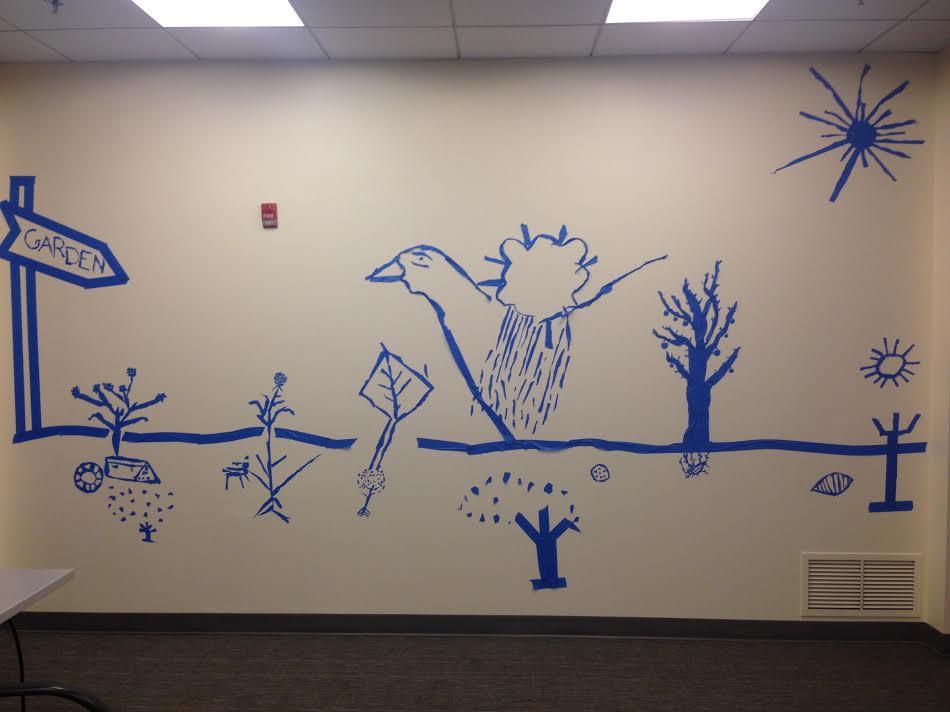
The mural depicted scenes from nature


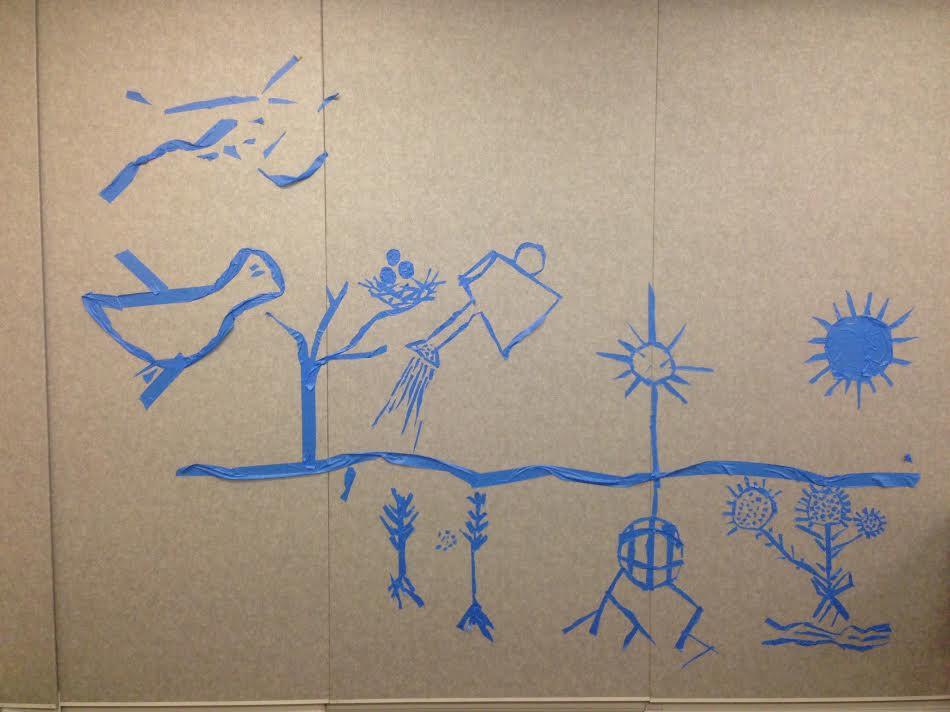
In a previous and similar activity, we made a healing garden out of tape. Participants were asked to plant seeds in the ground of the garden by drawing them with tape. They were then prompted to add sprouts to the seeds and so on until the seeds grew into trees, flowers, and vegetables. Participants were also able to contribute to the garden by caring for the garden itself, by making sure it had water and sunlight.

Tape Art - Healing ThemeI learned about making art out of tape when I worked on a few projects with a group called Tape Art in Providence RI. Using tape is great for community engagement because there are many different ways to draw and create with tape, and no predetermined expectation. Its flexibility makes it a great therapeutic medium to work with.
- Jeane Cohen

Macintosh HD:private:var:folders:mx:lx90j5f564g69x7fb4wj5c440000gr:T:TemporaryItems:unnamed.jpg
A detail of the tape mural including a watering can for the garden


Wednesday, July 13, 2016

Refugee Project Celebrates World Refugee Day at City Hall


On Saturday, July 9 volunteers from BuildaBridge led creative arts activities at Nationalities Service Center's World Refugee Day 2016 celebration. The event took place in the courtyard of Philadelphia Hall. The event was attended by many from the public as well as several familiar faces from our PPR and PRMHC classes.

Visual artist Arielle led an arts activity where visitors were encouraged to create "prayer flags." Prayer flags originate in Eastern cultures, and were originally used to promote compassion, wisdom, peace and strength (Wikipedia). It is believed that each one's message of goodwill will spread to the space around them. Each visitor was asked to use paint, glitter, glue, and sequins to create a flag representing "What does HOME look like to you?" Among the flags were images of hearts, smiles, and the word "love." We at Refugee Project think that the idea of home being "love" is an especially great example of how "home" can be wherever you make it if it starts inside of you!


Later in the day, BuildaBridge artists Liz, Amy and Arielle led a drum circle and invited visitors to come on stage and join in. Drum circles are an improvisational form of music-making used to bring communities together. Adults and children from all different backgrounds came together to make a harmonious beat. Some were even inspired to dance to the powerful music!


BuidaBridge would like to thank everyone at Nationalities Service Center and our creative volunteers for making this day a success. We hope to see everyone at this celebration again next year!


Tuesday, May 10, 2016

Spring Term Updates


As we move into May and warm weather finally arrives, both our PRMHC and PPR programs have been progressing. At Southeast by Southeast, Burmese Karen refugees have been using ceramics to explore ideas of support. The children created unique plates, cups, bowls and boxes using a variety of clay techniques. The items will be donated to newly-arrived refugee families in need to support them in their transition to Philadelphia.


Burmese Karen children paint designs in glaze onto clay plates they made

The Iraqi group in Northeast Philadelphia evolved to include Sudanese refugees as well. Parents and children in that group have been learning how to make colorful mosaics from broken pieces of ceramics. They are exploring the concept of identity, including their identities of their native countries as well as newly-formed identities in the United States.


The Iraqi/Sudanese group learned how to make mosaics using many different tools


At Nationalities Service Center, our Mixed Adult group is using music and art to explore themes of improvisation in art and in life. They are learning various musical beats and instruments as well as the technique of applique while exploring these themes. The Parents and Children’s group has been using visual art to explore the concepts of home and community, and has been working on a different project each week to work towards building a sense of community within the group.

Stay tuned as the Refugee Project gears up for our summer programming!


Thursday, January 28, 2016

Fall Term Highlights!

The Refugee Project provided therapeutic arts and art therapy programming for 148 refugees and immigrants since October 2015.  With the PRMHC, this included groups serving Iraqi women and children, Burmese Chin and Burmese Karen refugees.  The seven week Iraqi group created tapestries at individual, familial and generational levels which 1) enhanced social support and promoted social engagement; 2) nourished a sense of pride and respect for one’s identity; and 3) connected language to meaning in the context of family and community. 
Hope Mead demonstrates painting ceramics

BuildaBridge artists used ceramics, music and visual arts in a seven week term with the Burmese Chin and Burmese Karen groups to encourage individual creative expression while learning social skills of working together, turning mistakes into opportunities and academic skills that met the Pennsylvania Academic Standards for the Arts and Humanities.  Natalie Hoffmann led the project at Southwark School, creating a mural with nearly 20 students to illustrate the diversity of the school. Final touches are happening soon so stay tuned!

Southwark School mural in process


With PPR, the Fall 2015 ten week term served adult and children refugees from eleven countries all of whom were first and secondary survivors of torture.  Artists used drama, movement and the visual arts to create self-portraits of their emotions, explore themes of travel and home as it related to their journeys to Philadelphia and the metaphor of water for movement, flexibility and change. See 'Boat Full of Emotions' for details.

Spring Classes are coming soon!

·